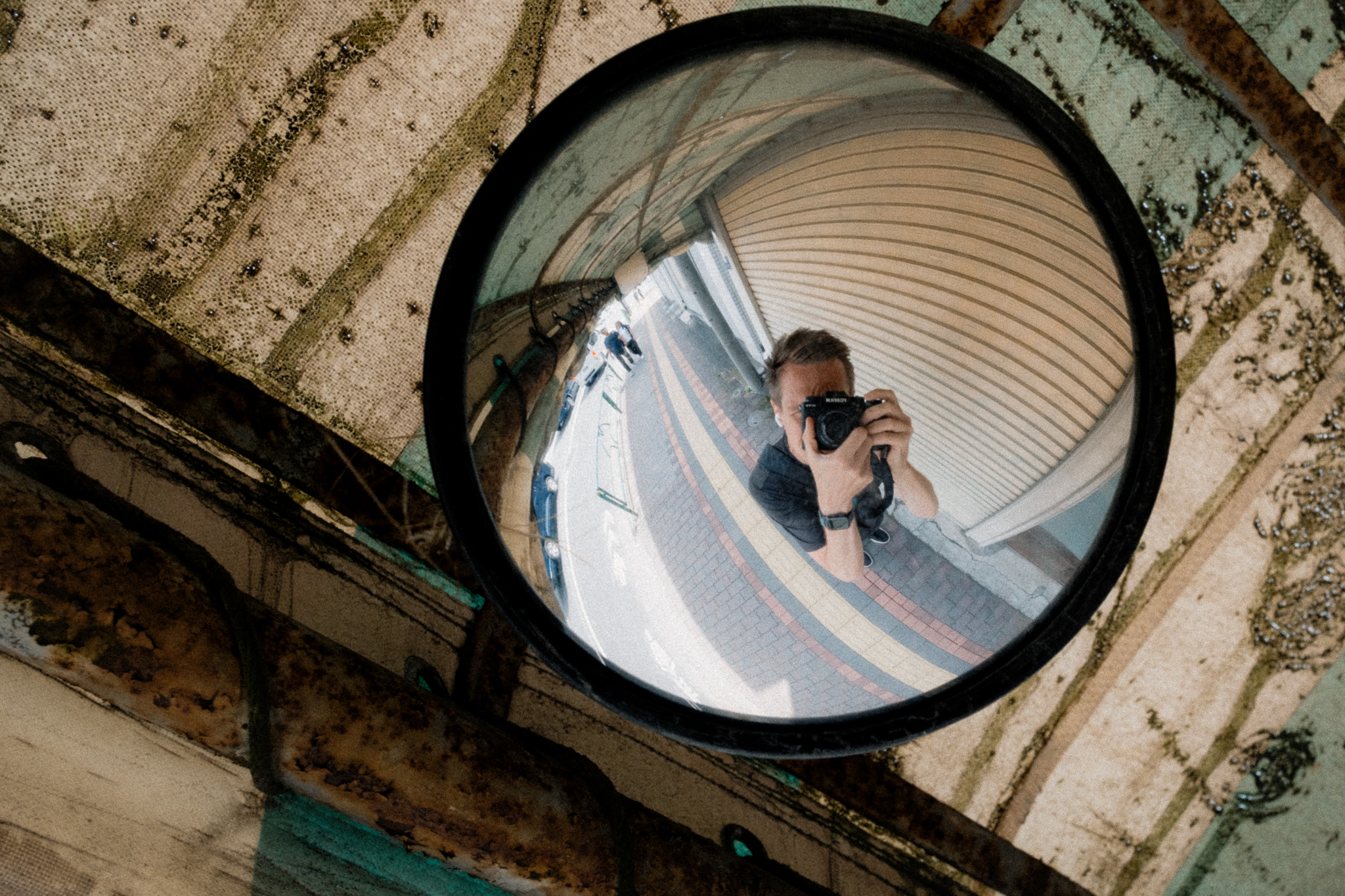
Embrace Constraints
The back screen on my X-T5 died on a Monday night in Fukuoka....
Not fully dead. Worse than dead. It only turned on when I held the camera vertical. Tilt it back to horizontal and the screen went black. Ribbon cable, almost certainly, worn through from the tilt mechanism. Seven days into a 23-day trip.
First instinct: shit. Find a repair shop. Price a backup body. Map every camera store in Fukuoka. My brain went straight into fix-it mode, the way it does.
Then I caught myself. Sat with it for a minute.
Why was this a disaster? The viewfinder worked perfectly. The camera still took photos. The only thing broken was a screen.
And that was the real question. Why was the cable worn out in the first place? Because I'd been tilting it constantly. Shooting from the waist. Chimping after every frame. Composing on a little digital surface instead of actually looking at the scene. The cable didn't fail randomly. It failed because I was using it more than the camera was built for.
So I made a call. Don't fix it. Lean into it. EVF only for the rest of Japan. See what changes.
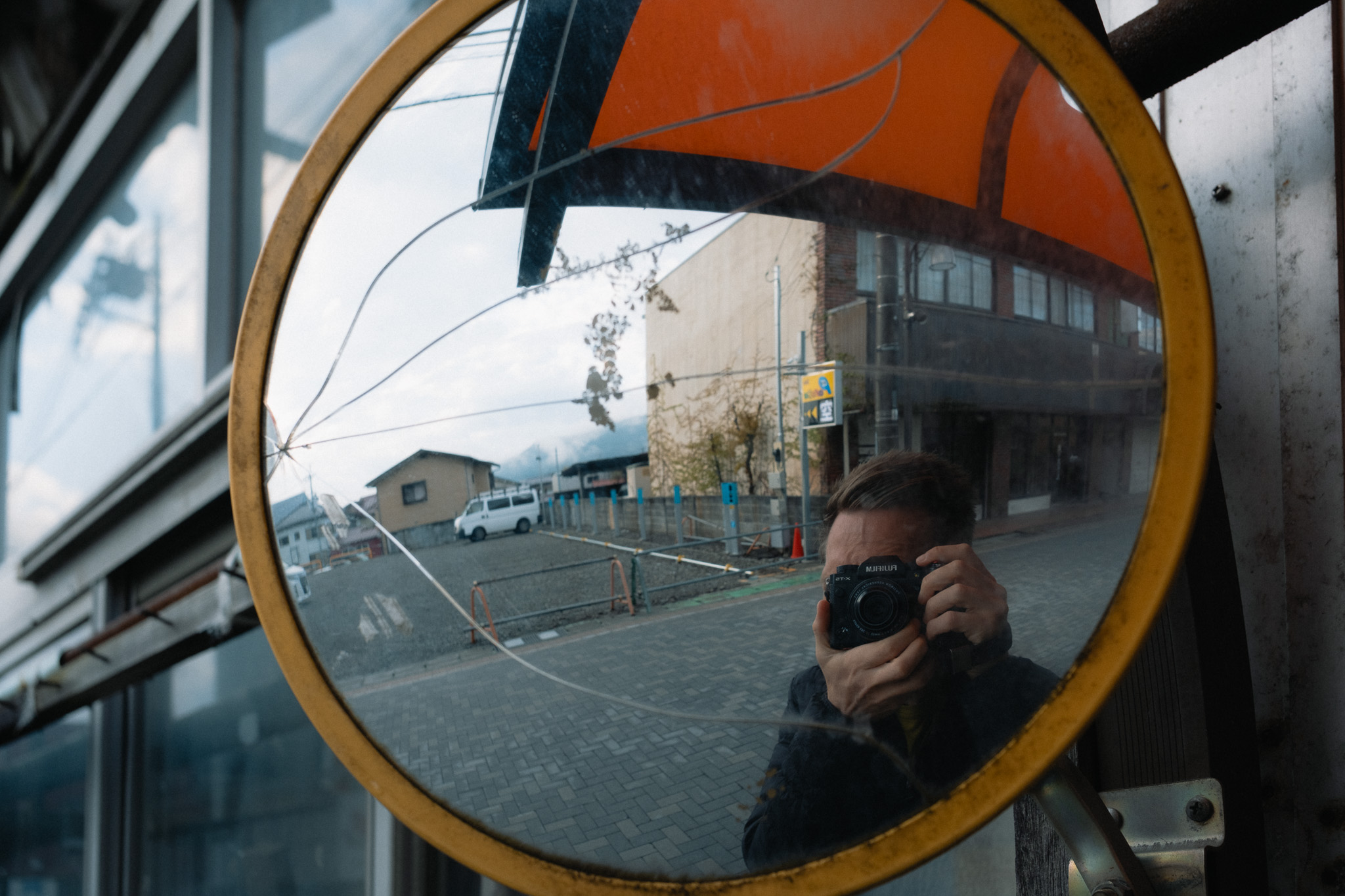
Day one, knees in the dirt
Nagasaki, the next afternoon. First proper day shooting only through the viewfinder.
Something happened fast. I was back to basics. Down on my knees, leaning into weird angles, working harder for every frame because I couldn't just hold the camera at hip height and chimp my way to a composition. The constraint was making me try odd angles again. I'd gotten lazy with the tilt screen and hadn't noticed until it was gone.
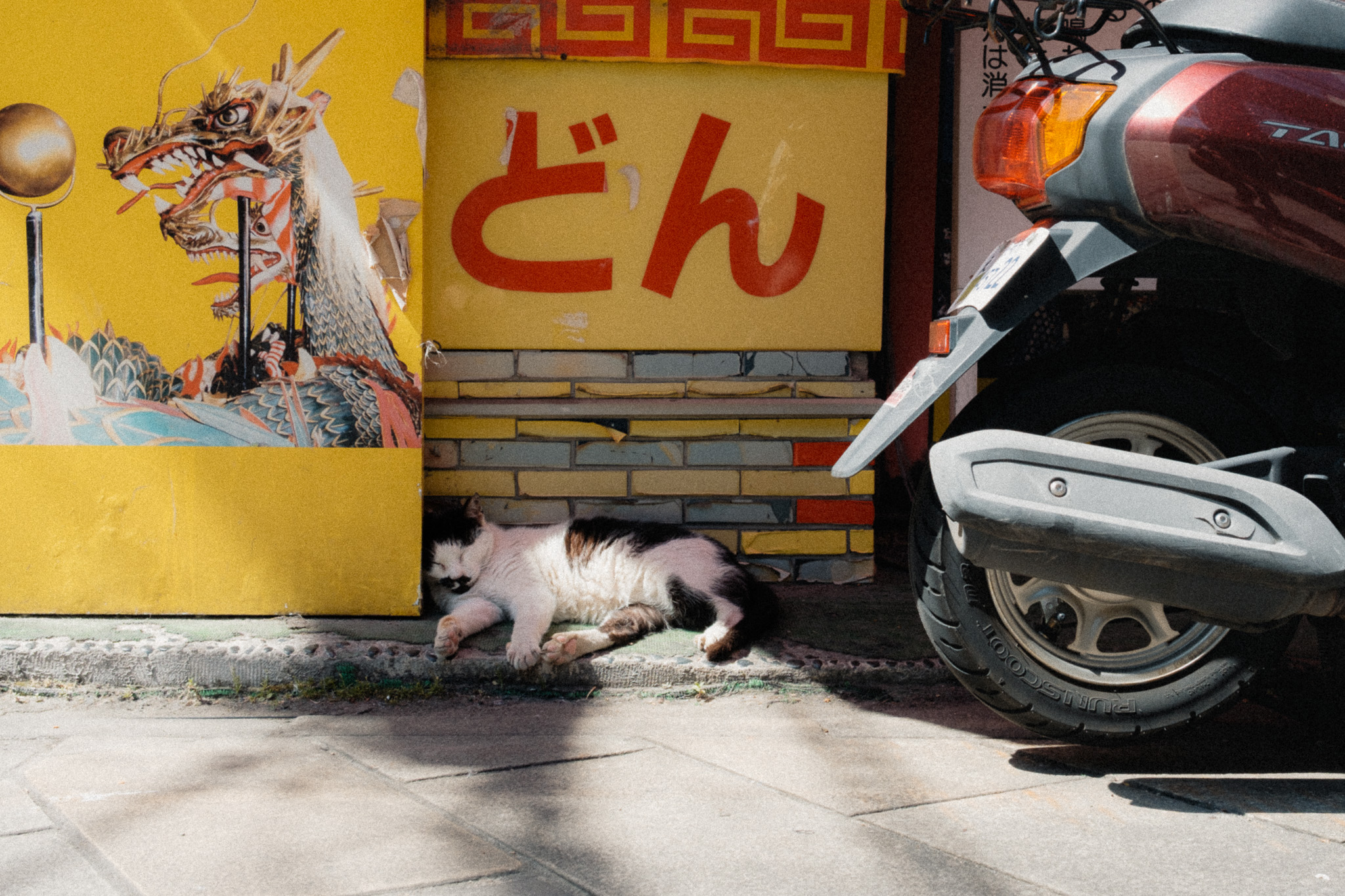
Found a sleeping cat against a yellow dragon mural with a scooter wheel cutting into the right side of the frame. Four layers of texture in one shot. Eye in the viewfinder, knees in the dirt.
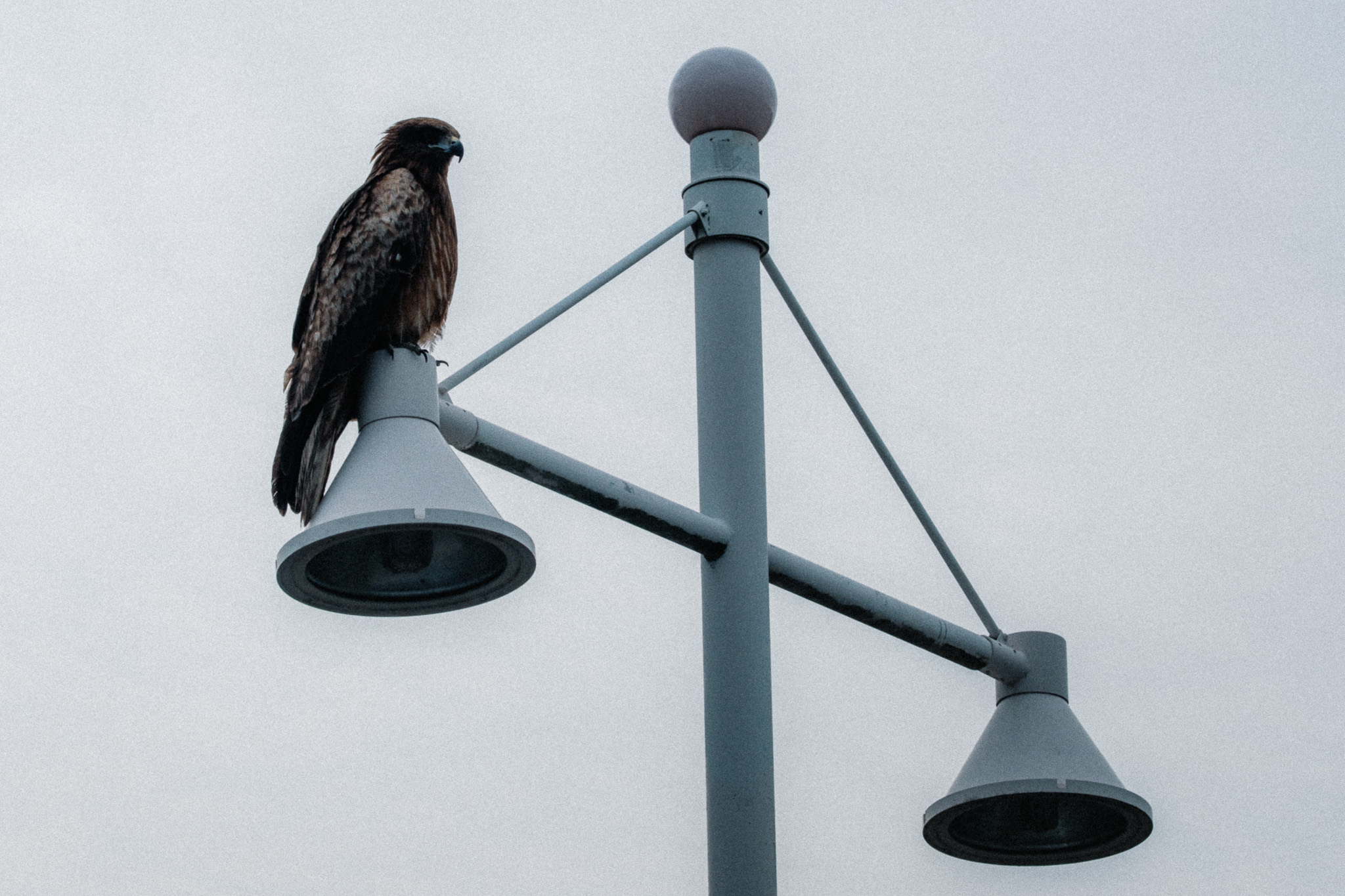
The next morning an eagle turned up at the harbour. An actual fricken eagle. I got frames of it, and the only reason I did was that the camera was already up at my eye. That's how I was shooting now. When the bird showed up I was already in position.
Two days in and I was thinking: I'm not sure I want to fix this screen even when I get home.
What the screen was hiding
Here's what the viewfinder taught me.
The hip shot is easy mode. Hold the camera at your waist, tilt the screen, fire and hope. You get volume. You don't get intention.
The viewfinder strips that away. You lift the camera to your eye. You pick the frame before you press the shutter. Every one becomes a decision. Pre-compose, wait, commit. It's slower, more deliberate... and the photos are better for it.
But the bigger shift was with people. When you lift a camera to your eye, you're declaring intent. People see you seeing them. Instead of sneaking frames from the hip, you're standing in front of someone and making eye contact through a lens.
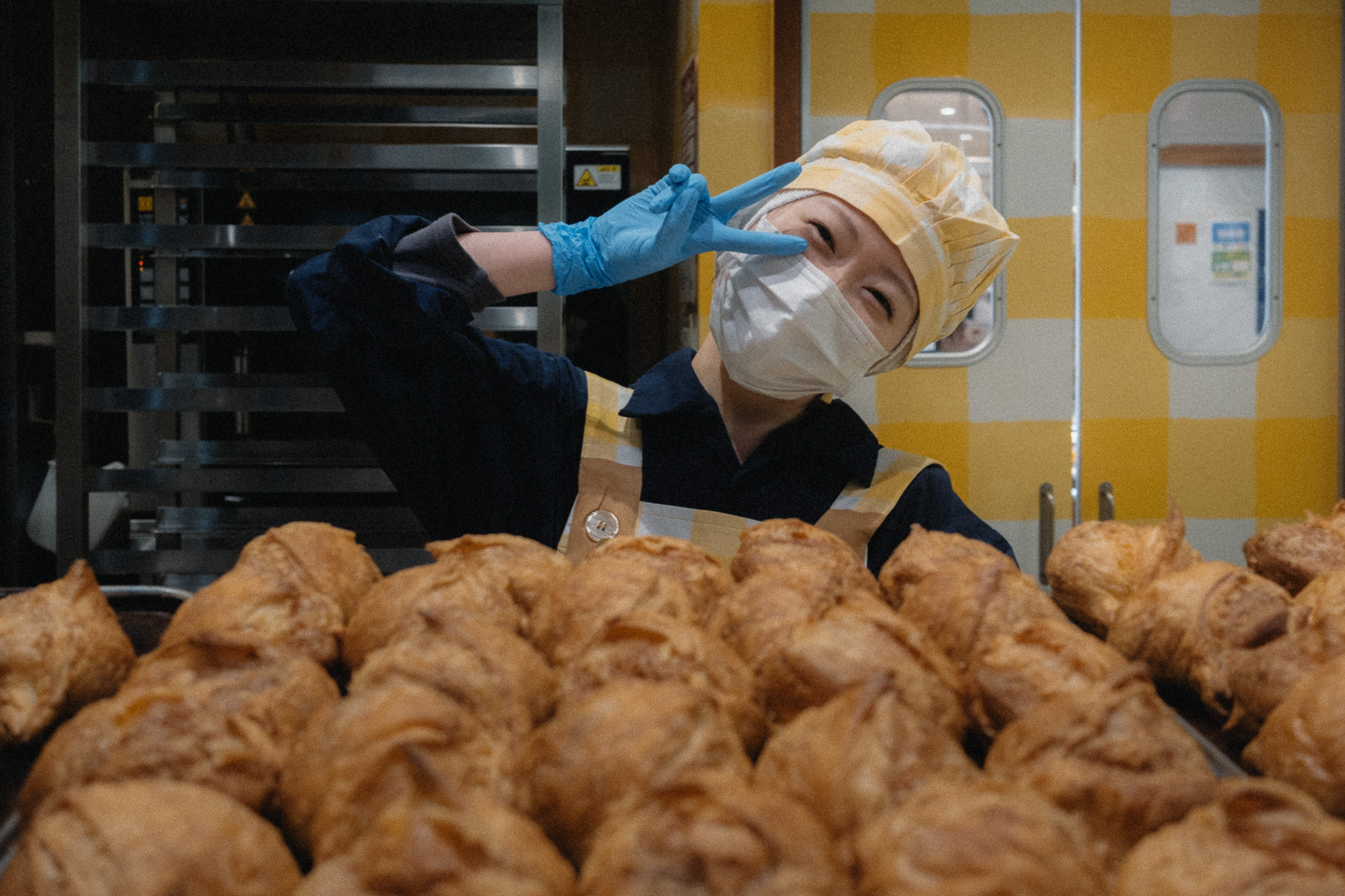
I came home with a little series of barista portraits from that trip. Five cafes across four cities, all shot close, all with permission. Nagasaki, Kyoto, Fujiyoshida, Tokyo. None of those happen from the hip.

The constraint is the gift
Take something away and what's left gets sharper.
I think we've got this backwards most of the time. We treat constraints as problems to engineer around. More gear, more stuff, and every one of them is somewhere to hide.
The tilt screen was my hiding spot. It let me shoot without looking, check without deciding, and feel busy without actually being there.
Take it away and there's nowhere to hide. You're just standing there with a camera at your eye, looking at the world, choosing.
Not fixing it
By Day 20 the screen was totally cactus and I wrote in my journal that it wasn't a constraint anymore. It was just how I shoot. Not fixing it. Not going back.
Something in your kit is going to break. Or the light won't turn up.
Good. Before you reach for the fix, ask what that thing was letting you avoid.
My screen didn't break my photography. It broke the habit I was hiding behind.